Cases from our journey
Tunnel Joint Experts.
Versterking Rijnkade

Period
2023-2025

Author
Joel van Stee

Role
Technical Consultancy and
Supervision
Client
Bouwcombinatie SAMEN – Ballast Nedam,
Hakkers, Van der Ven
Project overview & challanges
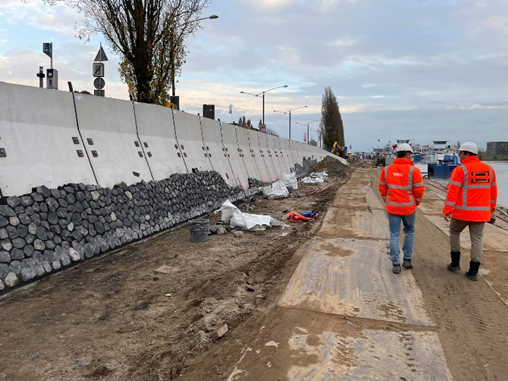
The Rijnkade in Arnhem is a primary flood defense structure that was found non-compliant in the third assessment round due to Macro Stability Failure Outward. To restore compliance with national water safety standards, the flood defense is being reinforced as part of the High Water Protection Program (HWBP). The project also includes infrastructure improvements such as stairs, public spaces, and the visible adaptation of the Jansbeek outflow into the Rhine.
A critical part of this reinforcement is the sealing of the joints between the prefabricated retaining wall elements. The sealing system must ensure long-term water and soil retention, withstand cyclic movements, and maintain performance over the projected lifespan. The design also had to accommodate water pressure variations, thermal expansion, and dimensional tolerances of the prefabricated concrete elements.
Sealing System Requirements
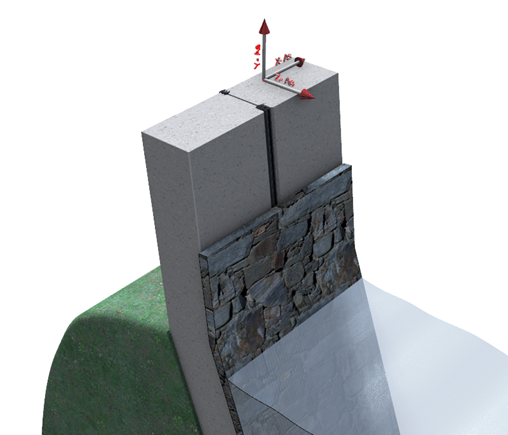
A crucial aspect of the reinforcement involved sealing the joints between prefabricated retaining wall elements. The seals needed to ensure water and soil retention while accommodating structural movements, temperature variations, and construction tolerances. The challenge was to implement a durable solution that could function under varying environmental and mechanical conditions while minimizing material waste and optimizing installation efficiency.
Solution and Implementation
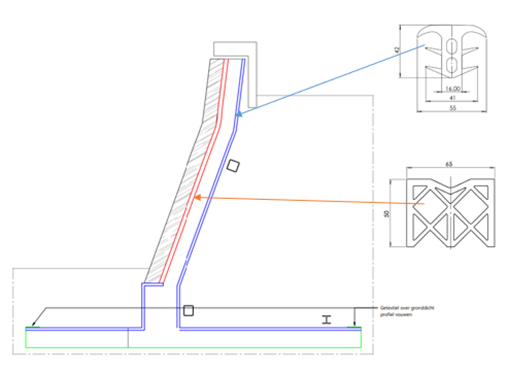
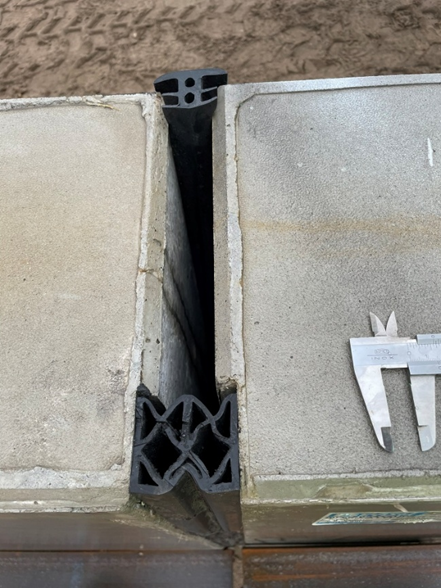
Duranium Engineering now merged with Tunnel Joint Experts BV was responsible for designing, procuring, and supervising the sealing system. The solution consisted of compression
seals installed in the retaining wall joints to create a
watertight barrier. ACME profiles were used for both soil retention and water sealing, while EPDM-based materials were selected for their resistance to aging, environmental exposure, and long-term compression stability.
Precision Cutting and Waste Reduction
To enhance efficiency, the sealing profiles were pre-cut to exact specifications before delivery, reducing on-site waste and ensuring an optimized installation process. Cutting losses were kept below two percent, allowing for nearly complete material utilization. This approach eliminated unnecessary waste, reduced installation time, and improved overall project sustainability.
Design Considerations
The sealing system was designed to accommodate expected joint movements due to structural shifts and thermal expansion. Water pressure variations and soil loads were taken into account to ensure the seals remained effective under fluctuating conditions. Installation was carried out in preformed recesses within the concrete elements, allowing for a streamlined and precise fitting process.
Testing and Quality Control
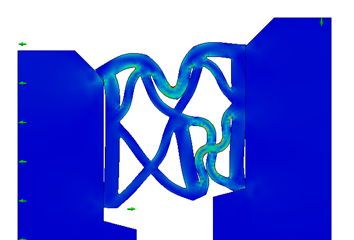
Extensive validation measures were taken to ensure the
effectiveness of the sealing system. Compression and water
tightness tests were conducted to assess material
performance. Finite element analysis was used to simulate
real-world conditions, confirming the expected behavior of
the seals under different loads. On-site inspections were
performed to verify correct alignment and sealing
functionality, ensuring compliance with project
requirements.
Role of Tunnel Joint Experts BV
Extensive validation measures were taken to ensure the
effectiveness of the sealing system. Compression and water
tightness tests were conducted to assess material
performance. Finite element analysis was used to simulate
real-world conditions, confirming the expected behavior of
the seals under different loads. On-site inspections were
performed to verify correct alignment and sealing
functionality, ensuring compliance with project
requirements.